
What happens when a bright child struggles for years—but no one identifies the real reason why?
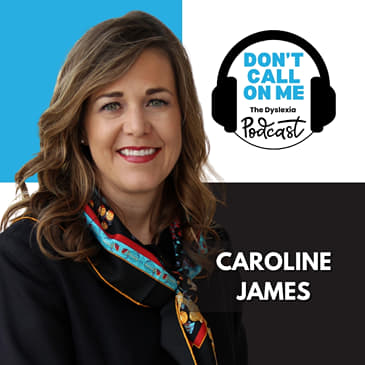
In this episode of Don't Call on Me, Megan and Aaron sit down with Caroline James, educator, mom, and dyslexia advocate, to share the story of her son Andrew. Andrew struggled with reading, writing, school avoidance, and behaviors that were interpreted as defiance. He received evaluations and support, but his dyslexia wasn't identified until middle school—even though the signs had been there for years. Caroline shares what she wishes she had known as both a parent and an educator, why behavior can be communication, and what changed when Andrew finally received appropriate academic language therapy and an environment that understood how he learned.
Today, Andrew is preparing for life after high school with something that once seemed far away: confidence in himself and the ability to advocate for what he needs.
Caroline also shares how Andrew's experience inspired her to advocate for other families through Literacy Roundup, a Fort Worth initiative providing dyslexia screening and advocacy support to families in the community.
In this episode, we discuss:
• The early dyslexia signs that can be mistaken for behavior
• Why a diagnosis alone isn't enough
• Asking exactly what intervention your child is receiving
• The emotional impact of years of struggling in school
• Academic language therapy and rebuilding confidence
• Teaching children to advocate for themselves
• What parents should ask during IEP/ARD meetings
• Why parents should trust their instincts and keep asking questions
• Caroline's work bringing dyslexia screening and advocacy into the Fort Worth community
Caroline's message to parents is simple: You know your child. Ask questions. Push for answers. And trust your gut.
🎧 Don't Call on Me is brought to you by Dyslexia on Demand and Advocate to Educate. Subscribe for more real conversations about dyslexia, special education, advocacy, intervention, and the experiences of families navigating learning differences.
#Dyslexia #DyslexiaAwareness #DyslexiaSupport #SpecialEducation #IEP #ParentAdvocacy #ReadingIntervention #AcademicLanguageTherapy #LearningDifferences #DyslexiaParent
With Love and Gratitude,
Megan, Eryn & The Don't Call On Me Team
[00:00:00] I think too many systems are in place to keep parents at arm's length from the school. And as parents, we need to be present. We need to be pouring into the schools in all the ways, right? I would show up on Thursdays with everybody's favorite Sonic order because eventually I needed to get information from them.
[00:00:20] But as a parent, I think so often we're just receiving information from the schools and we're allowed to ask questions and we're allowed to push and we're allowed to say, okay, well, that sounds like a great plan to pull them out of class for 30 minutes. Who's he going to be with and what are they going to be doing? This is Megan, owner of Dyslexia On Demand. And I'm Eryn, owner of Advocate to Educate. And we are the Don't Call On Me Podcast.
[00:00:46] We are here to talk about dyslexia, to remove the stigma, to hear what families really go through and to share their stories. In both of our businesses and personal experiences on a daily basis, we listen to people telling their stories. Many of heartbreak, many of struggle, but most all have a silver lining, even eventually. It's all about the stories.
[00:01:13] The more we share, the more we realize we aren't alone and we are a community. No, a tribe standing together. The Don't Call On Me Podcast is brought to you by Dyslexia On Demand and Advocate to Educate. All right. Welcome back, listeners, to the Don't Call On Me Podcast. We're very excited to share our guest with you today.
[00:01:42] She is a mom of a son with dyslexia and got fired up and turned into an advocate. So why don't you go ahead and introduce yourself? Hey there. So my name is Caroline James and I am in Fort Worth, Texas. I have three boys and my middle son has dyslexia. So Andrew's diagnosis was missed. He made it all the way till middle school without his dyslexia being diagnosed and without starting services. Wowzers.
[00:02:10] That's quite the elementary school experience, which I really want to hear about. I'm super excited. How does the journey start? Is there a struggle in school initially? Describe how you became Mama Bear in this situation and what your child was going through. Sure. Of course. So right about second grade, I noticed that Andrew was not making progress the way that he should be making progress. And I'm an educator, but I'm a high school teacher. So I taught world history. I taught French.
[00:02:39] I could teach you about the American Revolution. But when it comes to teaching reading, that is not my happy place. But at the time that Andrew was in second grade, I was also an administrator. I was an assistant principal in the same school district that Andrew attended. So here I was an administrator and my son was waffling in second grade. And I called on the school for help. I said, he needs to be tested. Something's going on. Why isn't he making progress?
[00:03:09] And so they came back with an SLD diagnosis. They said, he's got a learning difference in reading. They weren't specific about it, but he was going to get some support in reading. And I thought, OK, great. He's going to get the help that he needs and we're off to the races. Well, right around fourth grade, he started seeing some behaviors. He didn't want to go to school. He was having trouble in his language arts classes. I was getting notes home saying Andrew was being obstinate, that he was refusing to do
[00:03:38] his work, that if it had anything to do with writing, he was even like pushing the papers away off of his desk. He got in trouble one day because he pushed the papers off of the desk and was angry about it. Meanwhile, my husband and I were fostering and I saw this very caring, affectionate little boy with the babies that we were fostering. And I was like, OK, you guys are describing a child that I don't know. I don't know who you're talking about when you say that Andrew is refusing to be helpful in class, that he's refusing to do assignments.
[00:04:08] So it's time to dig in again. Let's do some more testing and figuring out what's going on with this boy. Well, this time they did another evaluation and came back and came up with an autism diagnosis, which I go back and forth with. Maybe he's on the spectrum. His pediatrician and I talked about it and we sort of landed in, well, is he going to get more services? Yep. OK, we'll sign off on it. Yeah. We'll sign off on the autism diagnosis.
[00:04:35] What that meant was, though, that he was going to continue to get more reading support and more math support. But what I failed to do as a parent was ask what that support was going to look like. Yeah. So he's going into a room with a very sweet educator. Was she qualified to teach Andrew how to read? Was she qualified, even if this autism diagnosis was accurate, was she qualified to help him with social skills and all the things?
[00:05:05] So fast forward to what they call a transition meeting in our school district, which is from elementary school to middle school. And I specifically asked that a representative of the middle school campus be at this meeting. And we're sitting around the table going over. Oh, meanwhile, I forgot to tell you this. When they diagnosed him with autism, they dropped his SLD. Oh. Which I've come to understand that you can't do that. I think that's illegal. So he was qualifying as a student with a specific learning difference in reading.
[00:05:34] And then he qualified as a student with autism, but no specific learning difference in reading. So that just went away. Apparently, he was cured in reading. And his problem was the autism, not the reading. Okay. Okay. So now I get this transition meeting and we're sitting around and they're doing present levels and all the things. And they're describing a kid that I didn't know. And then they're all describing just no progress. And I looked at everybody in the room and I said, what's your plan?
[00:06:05] He's going to middle school. He's going to have twice as many teachers. He's going to have to move in the hallways, navigate all those social, all that stuff. And it doesn't sound to me like you have a good plan in place. Right. And I left. And the teacher that was there from the middle school, who I had heard amazing things about this teacher. So I specifically asked that he be there. He followed me out into the hallway and he goes, you're moving him, aren't you?
[00:06:32] And I said, yes, I'm taking him out of this district. You've done the best you can apparently, but that is not good enough. And I moved him to a school specifically for students with language-based learning differences. That school used the school district's two tests. I took both of his tests to the school. They used the district's own testing to diagnose him with dyslexia. In fact, the diagnostician walked into my office and she said, Caroline, he may or may not have autism.
[00:07:02] He definitely has dyslexia. So she comes in and I had asked for the testing. And y'all, here's the crazy thing. Andrew came in later that day and he's sitting down over here. And I said, well, Carson was in here earlier today. Remember all the testing that you did? And he goes, yeah. And now we're in eighth grade now. And he goes, yeah. And I said, hey, buddy, you have dyslexia. And he goes, well, duh. Exactly. As a mom, that just gets you to the quick.
[00:07:30] And as an educator, I should have known better. He made it all the way to middle school. And I will tell you that from that diagnosis to today, that boy's posture has changed. The way he interacts with people, the books that he chooses. For his 16th birthday, he asked for books. Like who asks for books for their 16th birthday? I love it.
[00:07:54] Well, no, I mean, I'm 43 and I'm not asking for books for my birthday and I'm dyslexic. And I will never ask for a book for my birthday unless it's audio. Looking back now where the obvious signs that you think to yourself, man, I should have, because I've heard you say like, I should have known. But honestly, we come across this all the time where, you know, first of all, with our own kids, you might as well just put a blindfold on. Something happens when it's your own kids.
[00:08:22] It's so difficult to advocate for your own kids in itself. But then there's that next level of, okay, applying what you know, not your mama gut, but how do you apply the knowledge that you know and not be emotional about it? It's very, very, very difficult. So he hated school. He hated school in the grades that you're supposed to love school. He hated school in second grade.
[00:08:49] Second grade is supposed to be making friends, enjoying recess, all the things. He hated school. Mornings were a battle. He didn't want to go. He would tell me that everybody can do stuff and he can't do it. And I didn't drill down what it was he felt like he couldn't do. Looking back, parent-teacher conferences when this side of the table who are math science and this side of the table who are language arts related topics and this side of the table
[00:09:16] is describing a totally different kid than this side of the table. Because of course, his math science teachers saw somebody different. They saw an inquisitive kid. They saw an auditory learner. I can remember having a conversation with a teacher because she was frustrated that he didn't know the material. And I said, that's so weird because he and I had a great conversation about it. Have you thought about testing him orally? Well, we can't do that. And I said, okay, not for a grade, but because you ask him and see if he knows the material. And she did.
[00:09:45] And she goes, okay, he knows it, but he still has to be able to write it. And I was like, okay, but this isn't a writing class. So if it's not a reading or writing that you're testing, is there any way it could be in flexibility? So what did he experience? I think that he just felt like everybody could do something he couldn't do. Right. So I actually have another kind of circle back, piggyback question.
[00:10:11] Because in my line of work, I feel like I talk to several parents who are educators in the same district and are talking to me first because they're concerned about the pushback that you're experiencing, right? Just in general. Sometimes it's to test. Sometimes it's like to push further than just SLD. You know, well, which specific learning disability? Can you tell me?
[00:10:40] You know, that kind of thing. As an administrator, did you ever go through that because you were in the same district? Yeah. The testing wasn't a problem. When I asked for testing, both times they did it. And they wanted the second round of testing as much as I did because they thought it was a behavior issue. Yeah. But that's when I feel like we really went off the rails. In my mind, behavior is communication. And he's telling you something. But you failed to figure out what he was telling you.
[00:11:08] You just wanted to assign blame for the behavior. And so is he on the spectrum? Yeah, probably. But the behaviors that you were seeing, the ones that you were reporting to me, were directly tied to his dyslexia. Typically speaking, kids want to conform at school. They want to follow the rules, etc. So I think it's always so important to dig into the why. Because kids don't just wake up and decide that they want to be challenging at school unless
[00:11:36] they're trying to communicate something, right? Exactly. There's a problem. And that's why I bring up the whole fostering thing because it's so fascinating to me that I was seeing this very loving, very patient, compassionate kid with kids in our home. And then they were describing someone so different at school. And I was like, who are you even talking about? Because that's not my kid. But ultimately, I took my football and went home. I was like, peace out. You guys have had your chance with my son and I'm leaving.
[00:12:06] And so what pulled me back in was a friend saying to me, well, that's nice for you, Caroline. But what about everybody else? I don't think I understood a lot of what was happening in the meetings when we were reviewing testing and things as well as I should have. And so that's, you know, you have got a diagnostician that's going over the testing. And we know now that she didn't even understand her own testing because she missed the dyslexia. And so I wish I had known more.
[00:12:33] And I wish that those special education meetings were set up in a way for parents to understand the vocabulary, for parents to understand the acronyms, for all the things. But in his case, two full evaluations and they didn't find what was glaringly obvious when now I mean, you only know what you know. But looking back at that testing, I should have seen a pattern of strengths and weaknesses. This is a kid with the above average IQ.
[00:13:02] This is a kid with strong, all the other things were average. And so why was this one thing hanging out so low? Well, that is dyslexia. So I want to go back to, you know, him hating school. So if you can think back to that time where at this point, he's still not getting any specific services or intervention or anything, right? Until eighth grade.
[00:13:30] So how did that also compare to his siblings as well? Right. So that's exactly when I look back, those are the signs that I feel like I missed. Struggles in the morning, hating going to school, dragging his feet, like can't find my shoes, can't find my backpack, can't find my lunch. Like I remember one morning I was so angry. I took a wooden spoon and banged it on the table and the wooden spoon broke. And I was just like, could you please?
[00:14:00] Because I'm one of those moms. I mean, shoes, backpack, lunch are all lined up. Like how hard is this? Yeah. But what was really happening was all of these little attempts to delay getting back to school. Like, and he's a smart little cookie. So he knew exactly what he was doing. We could be late and I could miss that first period. And I don't like that teacher anyway. So. When you got his testing, I'm curious, like where were his reading levels or writing levels
[00:14:27] getting through to eighth grade and before a major change occurs, I'm curious if you don't mind sharing when you got a good read on finally, okay, we know what levels he's at. Where was he roughly? I would say he was probably hanging around third or fourth grade reading level even. And, you know, I say that I'd have to look at the testing. It may have been into fifth, but it was significantly low. What was incredibly glaring to me was his handwriting, his printing, his writing.
[00:14:57] Was awful. And what about spelling? And spelling was terrible. Yeah. It was always terrible. I have a picture of him in first grade holding up a spelling test with a 90 on it. I can't tell you how hard we worked to get that 90. And it was, you know, and now the work that I do with other parents of dyslexia, I tell them all the time, I don't want you to even look at the spelling grades. Like, just don't even pay attention to the spelling grades. And we'll be in special education meetings and the teachers are giving me evil eyes across the table.
[00:15:27] But I'm looking at the parent and saying, your kid was just diagnosed with dyslexia. So we're going to take spelling off the table. We're not even going to worry about spelling. Yeah. Yeah. Yeah. But it was his, his hanging his head going into school just, and that you asked about siblings. That just was absolutely not Billy's experience. Billy is a firstborn high achiever, eager to please kind of kid. And he just sailed through school and just did really, really well.
[00:15:54] And so the fact that Andrew was really digging his heels in it and not liking it. And I will say that it was a good, and this, I want to make sure that parents hear this. It was a good two or three years before I feel like he was fully healed and recovered from the trauma of being in a place where everyone gets it and you don't. And so I think the fact that he was in a small setting and getting the academic language therapy
[00:16:22] every day for an hour and a more understanding environment, all of those things wove together. It's not just academic language therapy that these kids need, especially when they make it as far as they did. Like in Andrew's case, they need healing. They need an understanding faculty. They need quiet hallways. They need calm classrooms. They need to be given the space to like learning again. And it's all the things. It's all the things.
[00:16:51] Trust us, you're preaching to the choir because both Erin and I feel very passionately about that. Tell us more about the experience since getting that identification and moving to key school. You made me think of a memory in between ninth and 10th grade. We always spend a summer with my parents. And when he came back in 10th grade, he wrote this beautiful paper for his teacher, Mrs. Coffey.
[00:17:18] He has a love-hate relationship with Mrs. Coffey because he really likes her, but she's his writing teacher and he hates writing. So he comes back from summer and she stops me in the hallway and she's like, Caroline, what is going on with Andrew? And immediately, you guys, immediately I think, oh no, what now? Like immediately that's where my head, I hate myself for that. I wish that I was ready to receive good news because she goes, no, it's great. He's like a light bulb has gone off, Caroline.
[00:17:48] He just wrote me the most beautiful essay about your summer and his time with his grandparents in New Mexico. I cried. Like I stood there in the hallway crying because she was bragging on my kid about writing. Like, I mean, that essay was on the refrigerator for, I can't tell you how many weeks because that, I mean, that's just huge. But again, it was the relationship that she built with him. It was a couple of years of academic language therapy.
[00:18:16] It was a couple of years of being in this small, safe, secure environment where he could, you talk about the inner voice, Megan, he, he'd been just beating himself up for years. And so it took a few years of, hey, wait, I can do this. I am capable. I have good ideas. Of my three kids, he's probably my most creative. He's very creative, great stories. He does little Lego stop action videos. He's got a lot going on up there.
[00:18:44] And so I just feel like I finally got my kid back, but it, but it took a few years. And that's a beautiful story. I'm curious, how old is he now? He's 18. Okay. Oh, wow. Wow. That's really special. So I'm curious what the two years of healing really meant when you said it, and then kind of if it still shows up for him.
[00:19:10] So during those two years, my father passed and I might. I'm so sorry. Thank you. Andrew was very close with my dad. And so I found a counselor for Andrew for a lot of reasons, but that was one of them. It was also end of COVID. I was checking in on his mental health with being alone as much as he was because he started the new school in sixth grade. So sixth grade was online and then seventh grade. Yeah.
[00:19:39] Cause that was, I'm trying to think COVID, but anyway, I was worried about him and his mental health. So he did start to see a counselor and I think that was very good for him. He needed someone other than me to talk about teenage boys need someone other than their mom to talk to. And that was hugely beneficial. And his counselor, I have to brag on him for just a second. What he does with kiddos like Andrew is called geek therapy. I don't know if you guys have ever heard of this, but they played games together. So they would do gaming.
[00:20:09] They would do like a Minecraft or Dungeons and Dragons or whatever it is. And so what you have is this adolescent boy getting to do what he loves. He feels safe and secure. And then they, the counselor can be strategic about bringing up certain topics. All that to say it was a really healing time for Andrew. So that was very good. And then the other big thing that happened right around that time is I started getting feisty about dyslexia for other kids.
[00:20:36] And so I started speaking at school board meetings. I went to a school board meeting and basically told Andrew's story and got up there and cried and said, you guys can't do this to any other kids. And I know you have kids sitting in middle school and high school because they were in Andrew's classes and they are sitting there struggling because they aren't at a private school with a very expensive price tag. And you need to do better for them.
[00:21:04] Well, during the course of those conversations, the Fort Worth Star Telegram reached out to me and asked if they could interview Andrew. And I really struggled with that because this is his private personal story. But we talked about it and Andrew was in a really good place and he told his story. And Silas did a beautiful job telling Andrew's story. It was like a six page article in the Fort Worth Star Telegram.
[00:21:31] He was on the cover, Andrew, his back facing his desk. And the headline was, I can't read. And he was on the page of the Fort Worth Star Telegram. And it was him telling his story. And I think that was really healing for Andrew. I think that allowed him to kind of process out loud, you know, what that was. And then all the feedback was so positive. And then I started talking to other groups and families and advocating for other kids.
[00:22:01] And y'all, I would be driving, having a conversation on Bluetooth and I would look in the rearview mirror at Andrew and he would just get this little grin on his face. And I was like, he is proud of this work. And I will tell him periodically. I mean, my whole job now is focused on serving students with dyslexia and their families. And he will say, yeah, mom, because you're making sure this doesn't happen to anyone else. I love it. So I think that, yes, the counselor helped tremendously. And I think him telling a story helped tremendously.
[00:22:32] Very much so. And you and your modeling and all of the pouring in that everyone has done at this point is what is going to make him carry that into his life. To, you know, confidently advocate for himself as he leaves that like safe environment of the key school where everyone understands his journey and moves into college.
[00:22:58] Where he's going to have to be his own biggest advocate over and over and over again. But he's fully equipped to do that. Self-advocacy is huge. It's funny that you say that. We were just talking. He plays the violin and he had a lesson yesterday. And I was talking to his violin teacher about a recent recital where Andrew stepped up to the stage and he looked at Matt, his teacher, and he said, hey, give me the first few bars.
[00:23:26] And the teacher or one of the other teachers was sitting in the front row and they were like, oh, they were panicked. They were like, oh, my God, he forgot his song. He's about to go on and he doesn't know his song. Matt played the first few bars for Andrew and he got up and he knocked it out of the park. And I said to Matt and I were talking about it and he said, Andrew knows what he needs and he asks for it. And he had the song, but he needed he needed someone to just like confirm for him.
[00:23:50] I know that's such a random example, but I don't know many kids who go up to an adult and say, hey, this is what I need to be successful in this environment, especially with a whole audience. I mean, it was a recital. There's a whole audience full of people out there. But he said, no, no, this is what I need to be successful. Asked for it, got up, got up there and did his thing and sat down and it was excellent. Wait a second. So how come he didn't come to this interview? Where is he right now? So he is watching my youngest.
[00:24:18] He was at camp last week and he's going on a fishing trip next week. But I was telling you that I fostered, Mark and I fostered for four years and we adopted our last foster baby. And so George is our, I call him affectionately my foster failure. I never let him go, but he's eight. So Andrew is in charge of George right now. I see. Okay. Okay. Wonderful. Wonderful. You guys are doing lots of wonderful things for the world. Yes.
[00:24:46] Can you tell us like how long he actually did intervention or is he still doing what's happening now with his support? Yeah. So he's still getting academic language therapy. The day that Carson and I vividly remember her telling me that she had confirmed his dyslexia. I went to the one academic language therapist on that campus that I just think pretty much hung the moon. And Christian has been doing academic language therapy for 30 plus years. She, she just knows that.
[00:25:14] And I said, I need you to find time in your schedule. And she did. And he started academic language therapy with her and has it still to this day. And the administrators know it's so funny because they'll be doing like some fun book reading or a guest reader or whatever. And I have told Chad, he does not miss academic language therapy. And Chad goes, yeah, Caroline. I know everybody's downstairs having hot chocolate for Christmas, but Andrew's in academic language therapy. Don't worry about it.
[00:25:44] He just, he needs it. And I want to make sure he has everything he needs before he goes off to college. And y'all, he likes it. He knows it's what he needs. He knows it's making a difference. And so it's that one-on-one. Actually, there's two kids in his group and it's just really zeroing in on those skills and providing him that hour a day that he needs to be a successful reader. Mm-hmm. Mm-hmm. Did the intervention really get him to a much more functional place?
[00:26:13] Even though he knows he needs it, has there been times where he's like, okay, when am I done with this? Like I'm graduating high school. Like what's happening? Or is he, he doesn't even, doesn't bother him. It's just part of his day. I think he knows he needs it. I think he knows it's helping him be successful. I mean, he's looking at colleges for next year. I really don't think that he has limitations on what he sees for next steps. So he, he really is looking at everything. You know, do I want to go, he's talked about armed services. He's talked about Coast Guard.
[00:26:43] He's talked about colleges. So he, he really thinks the sky's the limit, which is great. That's it. Yeah. Yeah. That's exactly what you want. Okay. And can you go into a little bit about what you're doing now? Are you still in the same position at the school, you know, and what, what currently you're doing for other families as well? Yeah. So that's what I'm, I'm really excited about. And I think that I give Andrew all the credit.
[00:27:12] He's my inspiration. I started advocating for students with dyslexia with little things like going to school board meetings. I have probably attended every single school board meeting for the last three years, honestly. And I am a broken record about serving students with dyslexia, about holding up the data and saying, this is what your data should be reporting as far as your numbers of students with dyslexia. And here's what you are reporting meeting with board members. I go to city council meetings and report on that.
[00:27:42] But then most excitingly was partnering with the city of Fort Worth and starting an initiative called Literacy Roundup. So Literacy Roundup is a public private partnership with the city of Fort Worth. We go into the community centers. Last summer, we were in six community centers and two libraries. And we screen everybody for dyslexia that's in their summer camp programs. So last summer, we screened 400 students for dyslexia. We found 131 of them to be at risk for dyslexia.
[00:28:11] We use DIBLS because it's low tech, it's reliable, it's normed, it's old, it's easy, all the things, right? And found 131 kids. But when we started this journey, I said, what I am not going to do is hand over an assessment to a parent and say, good luck. Right. I cannot do that because I've been there. So what we do then is partner them with an advocate.
[00:28:36] So every single one of our families who wants it has someone who goes with them to all the school meetings, who sits with them to review testing. And I didn't overly train these people for a couple of reasons. And I may have to readjust as I move forward. But I want them to sit on the parent side of the table. I call it, I affectionately refer to it when I talk about it at board meetings as the wall of computers. You have the parent sitting here and then you have six or seven educators on that side of the room.
[00:29:06] They've all got their laptops open and they're talking over their laptops to the parent in acronyms, saying a lot of why they can't do this or they can't do that to serve this student. And I wanted the advocate to sit next to the parent and be on their side of the table and ask questions. And I tell the advocates, if you don't know what something is, you can bet the parent doesn't either. So ask. You're there because you don't necessarily have as much emotionally at stake.
[00:29:34] You're not as amped up maybe as the parent. You're not as afraid, whatever. I want you to go in and just be their person. And so they go in and they ask questions and they demand better. And if the school tries to say, well, we don't think it is dyslexia, then they say, okay, well, then what is it? The kid is still obviously way below grade level as proven by the Dibbles assessment that Caroline did. So what are you going to do? But so we successfully advocated for those families last year.
[00:30:03] This summer, we are in 13 community centers. I love that. Yeah, so we've more than doubled our reach, which is huge. We're in five libraries, but one library, two Saturdays. So just offering free literacy assessments to families and then advocacy when they go back to school. And so I'm really intentional about how we inform the parents, how we sit down with them. We go over testing. I give them a letter that they can take back to their school.
[00:30:32] It's all pre-filled out. I walk them through the TEA guidelines so they know exactly what the timelines are supposed to be, that this is state law, that they are protected by state laws. I kind of teach them as much as I possibly can. We've now started doing informational Zoom sessions once a month, and then we have Zoom office hours so they can just log in and say, you know, ask questions. And I was so overwhelmed by the information you gave me, Caroline. Can you remind me what this, you know, whatever. And they had 88 people showed up.
[00:31:02] That's awesome. So now that your son is almost graduating high school, what are you doing professionally to support your community? Well, I'm trying to support other families and other students in the same way that I supported Andrew. Andrew, excuse me. Literacy Roundup is a public-private partnership with the City of Fort Worth and the Sid Richardson Foundation. So I work for the Sid Richardson Foundation in partnership with the city on an initiative
[00:31:31] to find students with dyslexia and connect them with services. Mayor Parker is very fired up about literacy. So she partnered me with the Parks and Recs Department. Literacy Roundup is an initiative that goes into Camp Fort Worth, which is a summer camp in the community centers in Fort Worth. And we screen students for dyslexia and then we offer advocacy to those families. Wow. Okay.
[00:31:56] And is there a website that they can go to to learn more or how would a listener contact you if they're in your area? Yeah. So Literacy Roundup is on the City of Fort Worth website. If you look up a Literacy Roundup on the City of Fort Worth website. And then all of our activities are on the Literacy Fort Worth Facebook page and on Instagram, Literacy Fort Worth. We have a page. And what's really cool is we also have a group, Literacy Fort Worth.
[00:32:24] And so you'll see folks who are working on their academic language therapy license and they're needing students. Or you've got a mom who has a question about attending an ARD. And then we also do, like I said, those monthly Zooms where we also offer office hours and things like that so that families can post questions and join us for all the things. Well, we're going to post all of these links in the show notes. But I have one final question for you, Caroline. Okay.
[00:32:52] So what is the best advice that you can give other parents when they find out that they're child has dyslexia? I think the best advice I can give any parent on any topic is trust your gut. When you know something is wrong and you have questions, ask them. I think too many systems are in place to keep parents at arm's length from the school. And as parents, we need to be present.
[00:33:20] We need to be pouring into the schools in all the ways, right? I would show up on Thursdays with everybody's favorite Sonic order because eventually I needed to get information from them. But as a parent, I think so often we're just receiving information from the schools and we're allowed to ask questions and we're allowed to push and we're allowed to say, okay, well, that sounds like a great plan to pull them out of class for 30 minutes. Who's he going to be with? And what are they going to be doing?
[00:33:47] Because she was a beautiful young teacher and they had fun together. She was absolutely the wrong place for him to be for 45 minutes every day for three years because it wasn't academic language therapy. So ask questions and trust your gut. You know your child better than anyone else in that ARG meeting. You know your child better than anyone else on that campus. Trust yourself to know what's right for your kid. That's what I tell parents all the time.
[00:34:16] There's that mama, daddy gut. And then there's a lot of this from the school and you follow the gut. Absolutely. You know what's so interesting, Megan? There are administrators out there who do this well. I would do, and I learned this from my principal, I would do pre-ARDS with anyone who is new to special education. Anybody that was new to special education, I had a one-on-one with the parent before we went into the ARD meeting. And I would say, look, I have to be focused on the whole school. The teacher is focused on her class.
[00:34:44] The special ed teacher is focused on her caseload. The diagnostician is focused on three schools, probably. You are the only person who's solely focused on your child. And I want you to come into that meeting and I want you to ask for the moon. Now, when everybody else comes in, it's all going to go in a blender. And we're going to come out with an IEP or a plan for your child that we hope works the best. But your only job is to fight for your kid.
[00:35:12] And that usually set our ARD meetings up pretty well because then they knew, okay, these people aren't jerks. They're not coming in telling me no for everything. But I wanted them to understand that my perspective was all 750 kids on the campus. That has to be my reality. That's, I'm the administrator. But I'm down for you fighting for your kid. That's exactly what you're supposed to do. I absolutely adore that you've done that.
[00:35:41] I am going to use that in the future. Good. That's what they're supposed to do. What hurt my heart the most was when parents would come in and just receive everything we were doing. And I was like, wait a minute. Hold on, team. You're allowed to ask for more. You're allowed to ask questions. You're allowed to disagree. You're allowed to table this ARD. You're allowed to stand up and stomp out if you want to. And that is okay.
[00:36:08] I find it very frustrating seeing advocates post on social media like, oh, if you're meeting, if everyone's not getting along, you're all not staying student-focused. And as long as you do that, everything should go great and you should be able to negotiate and get what you need. And I'm like, what planet are you on? That is not... That's not...
[00:36:32] Even with the teams that I wholeheartedly get along with, if there's not a little... I don't want to call it tension. But if there's not a little bit of... It's not even challenging, but a little bit of tension, I question who's like, are we really fighting hard enough for this child? Are we doing a great job? Yeah. I get it. Yeah. I have to tell you a really fast story about an ARD meeting.
[00:37:02] Had lengthy conversations with this mom. I'm going to use her name because she's okay with it. And I've posted about her on Facebook, but her name's Desiree, really struggled with her son, knew there was something going on, was ready to change him from one school to the other. So she did private testing over the summer, took the testing to the school. They refused to even look at it, put him in a general education classroom, tormented the family and this child for however many months until they finally got the testing done. Okay.
[00:37:32] So, and the testing was done. The testing that she took them was from a reputable... Anyway, she and I are talking, the school comes back with their testing. The report was maybe 50, 60 pages long. It was huge. So I walk her through the report, tell her what I think they're going to qualify him for, tell her what I think the IEP should say, all the things. And I said, Desiree, how are you feeling? And she goes, I'm pissed. This is ridiculous that he was suspended, that I was called out of work multiple times,
[00:38:01] that I almost lost my job over this thing. And I said, okay, I'm going to tell you what, we can go into this meeting tomorrow and I can go to town for you. I can rake them over the coals because what they did is unconscionable. They should have accepted the testing. He should have put in a probationary placement. They absolutely could have done that until his needs were met, blah, blah, blah, blah, blah. Or I can go into this meeting and we can drop an IEP that works for your son. Which one do you want to do?
[00:38:28] Because we can't do both in the 45 minutes that they've allotted us. Let's just be realistic. And she was like, Caroline, I just want my son to get services. I said, all right, I'm down for that. But if at some point during the meeting, you want me to go to town, you just give me the nod. She's like, okay. So we walk into the meeting. You guys, there were 17 educators in this room. They were so afraid that there was going to be a problem. So we landed in a pretty good place. They reserved this tiny little corner of the table for the two of us.
[00:38:57] They all had their laptops open. Desiree and I are sitting in this tiny little corner. They left us in the front office. They came and got us 15 minutes late. We go into the meeting, get through the ARD meeting, all the things. Thank goodness I had gone over the testing with her because they thought that they were going to cover the testing and create an IEP all in this amount of time. We get through the IEP because I had already prepped her on what we were going to ask for. And it was all reasonable and all the things. And she looks at me and she gives me the nod.
[00:39:24] And so I said, I need everybody to close your computers and listen to me for a second. What you have done to this family for the last four months is immoral and reprehensible and inexcusable. And I just kind of went through the list of all the things that they could have and should have done. And the administrator looked at mom and said, I am so sorry. And we will do better for you and your family moving forward. And I looked at her and I said, thank you. I need you to do better in the very next ARD meeting.
[00:39:53] I need you to carry this across the campus. And she said, I will try. And I said, I'm going to hold you to it. So what I'm trying to do with Literacy Roundup is slowly turn the battleship a little bit. I have seen because we're consistently in the same schools, they're getting better and better. I'm seeing them get better and better. And I have systems in place. Like I bring a sign-in sheet for them to all sign. And then I put it in front of mom so that she, whoever the parent is, so that they know who's in
[00:40:22] the room and how to reach out to them after the meeting. And now, you know, initially they were like, well, I don't know about that. And I finally said, you guys, this is fair. This is what's right for the parent. She should be able to reach out to you after the meeting. She should know who's in the room and why you're here and what position you're serving. And now they just expect it. They understand that it's coming around the table. They get it. They get that I'm going to be there. They get that. So it's, it's, I have hope.
[00:40:46] I think you're just empowering those parents too, because it is so daunting. And yeah, sure. They were provided procedural safeguards, right? But what the heck is that? For example, right? That's just one of the many things that really needs to change. And listeners, when she's referring to an ARD meeting, that's what we call IEP meetings in Texas. If you didn't connect those dots. Well, Caroline, you have been such a wonderful guest.
[00:41:15] I think such a wealth of information, but also empowerment to parents. And we really appreciate you spending some time with us today. Thank you so much for the opportunity. I hope that every parent knows that it's their job to fight for their kid. Yeah, it absolutely is. That was a great closing. Thank you so much. All right, listeners, we'll see you next time. Today's episode is sponsored by Advocate to Educate.
[00:41:42] We help parents navigate through the confusing maze of special education in public schools in California. We support families starting as early as preschool through 12th grade, creating individual education plans to support the specific needs of your unique and amazing child. To learn more, go to our website, advocate2educate.com. Today's episode is sponsored by Dyslexia On Demand.
[00:42:10] Dyslexia On Demand uses only the highest trained dyslexia therapists, and it's all one-on-one and individualized to your child's needs. The best part is that it doesn't matter where you're located because it's all virtual. Visit us at dyslexiaondemand.com to learn more. Thanks for spending time with us on Don't Call On Me. If today's stories touched you, please take a moment to follow us on social media and subscribe on YouTube.
[00:42:40] Extend the impact by sharing your story at don'tcallonme.com. Your experiences can foster understanding and strengthen our collective voice. Let's keep making a difference together. We look forward to having you back for the next episode.