What does dyslexia feel like from a child's perspective?
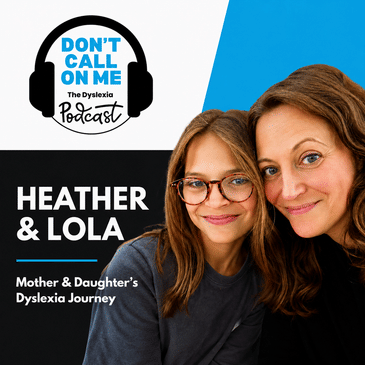
In this episode, 11-year-old Lola and her mom, Heather, share Lola's journey with dyslexia.
The most powerful part is hearing from Lola herself. She talks about embracing dyslexia, recognizing the creativity and imagination in the way her brain works, and learning to trust herself. That perspective shines through in her essay response:
Middle School Essay Question:
A big and special part of me that I want to talk about is how I've become much stronger and more resilient since being diagnosed with dyslexia. When I was really little, like in kindergarten, I didn't notice a difference between me and the other kids. No one could read. I understood everything I was being taught. Reading was a bit hard but at the time I didn't think much of it because I was just learning to read for the first time. Then in 1st grade my teacher had shelves of books with letters on them from A to Z, A being the "easiest" and Z being the "hardest". We got assigned letters that fit with our reading level. I watched the other kids all move up but I couldn't move past the bottom few levels.
The next year I started to notice everybody was moving ahead while I felt I was still making no progress. For example, one of my best friends was reading Percy Jackson and I was still trying to master picture books. I thought to myself "Why can everybody else read and I can't?" Even with the books that were so easy to all of my friends, I just couldn't read them. The letters would jumble up my head. The d's were b's and b's were p's. I would try to sound words out but I couldn't put chunks together. I didn't understand sight words. I would hear a word, see it, say it, but it never stuck. They would tell me to just "picture read" but I knew that wasn't reading. My eyes would get really tired and it was always "just try honey" but I was trying as hard as I could.
Throughout this time my parents kept trying different things. I had group tutoring at school, but it wasn't getting better. I got great grades in everything else but when it came to reading it just seemed impossible. I didn't know what to do. I felt confused and frustrated and just straight up infuriated. And sometimes really lonely. I knew everyone was trying to help and understand, but it felt like they just didn't get it.
Eventually we did a lot of tests and I was diagnosed with dyslexia. One day my parents and I were sitting on the couch and they told me that I would have to do a special dyslexia program, 1 hour lessons, three afternoons per week for almost two years. At first I freaked out. I didn't think I could do it but I had to, so the journey began. I met my therapist Jennifer and worked with her on zoom. At first it was hard and I worried that it wouldn't work like all the other things I had tried. But slowly it started to make a difference. I was getting more confident and I felt like reading started clicking like it never had before. It doesn't mean reading was suddenly easy but it was easier.
Fast forward a little over two years, and this week I just graduated from the program! I celebrated on zoom with Jennifer. I don't know where I would be right now in reading without it.
Being able to get through it has given me independence and helped me believe in myself. Sometimes it felt unfair that other kids could get it so easily. But then I think about all the other things I can do easily, like I have a huge imagination and can create stories in my head. I love to write and I'm actually good at it. I love art and thinking outside of the box.
At first having dyslexia used to make me feel sad sometimes, but it's different now because I know I can deal with it. Now instead of seeing it as a liability, I've started thinking of it as also a kind of superpower. Everyone's brain thinks differently and I'm grateful for all of the special things my brain can do. And going through all of this has made me feel strong and like I can be prepared for a challenge. I feel special and I know I can do things that are hard.
With Love and Gratitude,
Megan, Eryn & The Don't Call On Me Team
[00:00:00] If you don't have Dyslexia, you can't really know. And parents don't often sit down with their kids and be like, this is Dyslexia. So I'd often tell my friends, I'd be like, I have Dyslexia. And they'd be like, oh, cool. What's that? And I'd explain it to them. And my closest friends do know, but like a lot of people still don't know. And if people do know what Dyslexia is, they think it's, you can't read or words float, which is not what it is because I can read and words don't actually.
[00:00:30] float. So I saw simulations and it was words moving around. And I was like, that's not what it is. And my mom was like, well, it's just supposed to show the frustration. But I'm like, but that's not near the frustration because you know, you're not supposed to read this. You know, this is something to show what Dyslexia is, make people understand what it is, like understand people with Dyslexia. But you know, no one else can read this as this is supposed to be hard. But when I'm doing it, everyone
[00:01:00] around me can read it. And I'm supposed to be able to do this, but there's just something wrong with me. This is Megan, owner of Dyslexia On Demand. And I'm Eryn, owner of Advocate to Educate. And we are the Don't Call Me Podcast. We are here to talk about dyslexia, to remove the stigma, to hear what families really go through, and to share their stories.
[00:01:25] In both of our businesses and personal experiences, on a daily basis, we listen to people telling their stories. Many have heartbreak, many have struggle, but most all have a silver lining, even eventually. It's all about the stories. The more we share, the more we realize we aren't alone, and we are a community. No, a tribe standing together.
[00:01:54] The Don't Call On Me Podcast is brought to you by Dyslexia On Demand and Advocate to Educate. Welcome, listeners, to the Don't Call On Me Podcast. Today, we have a mom and daughter duo, and I'm so excited to introduce them. Lola, can you introduce yourself? Hi, I'm Lola. I live in California. I'm 11 years old, and I'm going into sixth grade. Awesome. Heather?
[00:02:23] And hi, I'm Heather, and I'm Lola's mom. Wonderful. So today, we are so excited that we have Lola here to share her dyslexia story with everyone. Lola, are you ready? Yes. You excited? Yes. Okay, great. Take us back in time to your first memories of school. Can you share with us what that was like?
[00:02:48] I don't remember too much of school before kindergarten, but when I started kindergarten, it was currently COVID, so we had to do all my school on Zoom. So my parents helped me practice out of Zoom, out of school, just to make sure I could keep up and stuff. So we were practicing reading the Bob books, which are really simple. They have cat, the, really simple words, but I would always try to read them, and I remember
[00:03:18] getting really frustrated. And I didn't easily get frustrated. I was very happy, but I tried to read it, and I tried to read the word the, and I'd be like, and I just couldn't say it right. And then they told me they were like, the, and I was like, oh, okay, the. And then the next page, it said the again, and I'm like, I don't say it right every time. Yeah.
[00:03:43] So is it fair to say that when you think about starting school, it wasn't all rainbows and butterflies? Yeah, because when I started, like, I was doing pretty good in the other things and stuff. I would just, it was fun. But during, like, reading class, we would just sit there, and sometimes I'd just, like, it's easier to not think about when you're on Zoom and stuff, and I would just kind of sit there and relax.
[00:04:10] But then when I got to first grade, we came back to school, and the way it worked is, like, the first grade level was A to D, like, of first grade, and they had a bunch of different books in every category. And everyone was, like, moving up the whole way, and I was staying on the lower levels, and I was really frustrated. And, like, I was, like, on a B book once, and I remember it was a book about, like, a butterfly or something, and I just have this distinct memory of sitting there trying to read it, like,
[00:04:40] the whole time, and I couldn't get past the first page. And it was really, like, frustrating because everyone else, I remember someone was, like, I got to a Z book, and I was, like, on a D book or something was my highest, and, like, everyone was ahead of me, and I was, like, really confused. I was just going to say, how did that feeling make you feel about school? I usually like school.
[00:05:06] I like hanging out with my friends and stuff, but when it came to reading, I didn't want to, like, talk to people about it. I kind of just wanted to read books, and the only book I would really like to read was, like, Piggy and Elephant, because I think I kind of had memorized those, and I was just reading them. Piggy and Gerald? Yeah. Piggy and Elephant. Isn't it Piggy? Is it Piggy and Gerald? The reason why I say that, because my kids used to read that book to me, and it was, like,
[00:05:34] the one book that I could clearly read to them. For some reason, as, let me just share with you, Lola, even as an adult, when I read children's books to my kids, my kids ask if Daddy can read, because when I try to read them, they don't come out so beautiful. But the Piggy and Gerald books, I found that those were, I actually, like, could read those books. But I'm 43, so you think it's probably time that I could read those books?
[00:06:03] Maybe. Well, I think even, like, with simple books, sometimes I can even, like, by now I can read them to myself. But when I have to read them to other people, I get, like, really nervous. Like, I, and I kind of, like, stutter a lot in my words, and I just, like, I take a lot. Like, sometimes I start panicking because I'm just, like, looking at it. And then it's, like, I'm trying to read it, and I'm taking forever, and I'm sounding it out, and everyone just staring at me, like, in class, like, waiting for me.
[00:06:33] And someone has to, like, tell me what the word is, and it's just really frustrating. I feel like you are me and I am you. That story is just a core memory that I have to remind myself as an adult, and this will happen to you when you become an adult later. And I know you've also made so much progress, Lola, and I don't want to spoil the ending,
[00:06:58] but I know you've come so far, and I'm sure even now you have to remind yourself, like, wait, I can read this. Like, I don't need to be scared. I really can do it. But our brains take a while to catch up. Our brains take a while to trust that when we feel that embarrassment, that holds on for a long time, unfortunately. So, Heather, can you share with us what you were going through as a mom watching your
[00:07:27] daughter start to struggle and kind of feel all of her feelings about what it was like seeing other kids moving at a faster pace and her starting to compare herself to the other kids? Yeah. I mean, it was really hard. I will say what Lola said about how generally she really loved school and she wanted to be happy is so true.
[00:07:54] Her outlook on school in general and learning was so incredibly positive that I think she kind of just took this burden on for a little while, and it wasn't immediately apparent. And then I think the piece of having the kids in kindergarten completely on Zoom was a huge piece because it wasn't immediately apparent what was going on. It was her third hour of Zoom school each day was reading.
[00:08:20] So it was hard to know if it was just overloaded and we weren't pushing and the reading would come. But to be perfectly honest, I had a feeling something was wrong really, really early. Maybe that's a mom thing when everyone else was like, no, it'll come together. I just had an inkling that something was up because Lola got everything else so quickly.
[00:08:43] She was so advanced and so verbal and had this huge vocabulary and language was like one of her gifts. Verbal language was one of her gifts. So when we would see her, like she was saying with the Bob books, see the word the, we'd say the, she'd know the two pages later, she was back to, to hockey. And it was so confusing to us.
[00:09:08] I think it was frustrating at school because it was hard to make her school see it. We love her school or her now her past school. We love them, but she excelled so much in so many areas. That when we would say, yeah, but I feel like there's something up with the reading. It was like, oh, she'll get it. Let's just give her a little extra help. All these kids are behind. She'll be there. It takes some kids a while.
[00:09:36] And meanwhile at home, and she would put on a happy face and a brave face. And, you know, I don't know. She seems okay. She seems so happy. But at home, she would be like, why can't I get this? We were almost downplaying it a little bit back then because we didn't want to create this stress for her. So we were like, it's fine, sweetie. You'll get it. You know, you'll get it. Well, deep down, I was like, there's something off here. My husband and I were like, there's something off. No, I was going to say that feeling and that intuition.
[00:10:04] It is so important that you listen to that because I will tell you that the vast majority of parents that I talk to all have a similar story in the sense of like they just felt their mama gut was saying there's this big disconnect and it doesn't make sense. And really, generally what they do is kind of listen to that voice of those teachers who they trust. Just hold on. Just trust.
[00:10:32] But what happens is that gap keeps building. And that's that pivotal point at which they always say, gosh, I wish I had trusted myself and chased that rabbit instead of just holding on. Right. And I think my experience as a mother, and I imagine that this happens to a lot of parents, a lot of women, is this like push and pull between, oh, like I don't want to be too much
[00:11:01] or I don't want to like. Don't be crazy. Yeah. Don't be crazy. Don't be overbearing. Why are you writing your kids so hard? You know, to try and communicate like, no, this isn't that we're like, we need her to get great grades in first grade. Like it had nothing to do with that, you know? Oh, and so, but I was like, there's a disconnect here that we can see. And the way she just didn't retain some of these sight words and she'd have them and they'd be like, no, she has them.
[00:11:29] And then I'd say, yeah, but two minutes later, she doesn't have them, you guys. Or she would see the word saw and say was every time. In first grade after school, I'd do this tutoring and it was like fun. We'd get snacks and the teachers were really nice and stuff, but it just wasn't working because it was just read this book. And then it was like another time we tried this one thing and it was like, oh, we're going to do this. Or I remember this one time you were like, come on, we're going to do this tutoring.
[00:11:59] It's going to be really fun. We're going to do it for a little while, see how it works. And we did it once. And then suddenly it was like not happening anymore. And it was just really confusing. I was like, why do we need all this tutoring? Why do I need this? Some of my friends need this and things like that. Yeah. You know, most kids go to school and learn to read. And there's kids like us who we have to take that next step and do it after school.
[00:12:28] I don't know about you, but I felt like it was so unfair. Like my friends got to do what they wanted, not what they wanted. You know what I mean? But they got to do fun things after school while I had to go to tutoring. What really bothers me is when people say it's not fair for them because like when I'm in class and I get this extra help and people are like, why does Lola get it? It makes it easier. That's not fair. And I'm like, it's not fair for me because there's a reason that I need this.
[00:12:57] You can just do this without needing this, but this is hard for me. So Lola, can you share with us what continued to happen? Was there continued frustration? Did, you know, because you went from being online back into school. So share with us a little bit about what it was like up until you really felt like you were getting the right help. Well, again, we did all this tutoring and stuff after school.
[00:13:26] And I remember in second grade, there were more books and people would tell me to like picture read, like the pictures will give you clues and stuff. I remember this one book, it was about like a storm. And I got so frustrated because it's, it takes so much work to just read it. And I can do it. Like if I try to read a chapter book, like I can read it, but it takes a lot longer. I just sound out the words and also my brain kind of gets different parts of the words.
[00:13:56] So from then on, it was still really frustrating because I was like, I don't know what picture reading means. And all of my friends were like supportive and they were like, good job, Lola. But everyone in my class was confused, like why I couldn't read it. And even other people, like the teachers were like, come on, Lola. And I feel like it was like always people being like, just try a little harder. But I was like trying as hard as I can.
[00:14:25] And it got really frustrating. It's so unfair. I just want to say it's so unfair because if you had something physical that they could see, nobody would be asking you why you're using a ramp. Right. Can you imagine anyone going up to somebody in a wheelchair being like, why do you get to use the ramp? I don't want to walk up the stairs. Or glasses. It's the same thing. Right. Like, why are you wearing glasses? Why would you need that?
[00:14:51] And I think just to add some color to this, Lola, we really didn't have the dyslexia diagnosis until going into third grade. Spent all of second grade still trying. And I think second grade is when a lot of kids who are easy readers really hit a stride and start picking up, you know, Harry Potter and Percy Jackson. Not all of them, but some of them.
[00:15:14] And to watch Lola truly struggling with the most basic of starter books when she was killing it in all the other areas, confused her teachers. I got really annoyed when I got like my report card and it was, one was like not good. And then four was like above grade level. And three was like, you're doing right on your own path. So I got all threes and fours.
[00:15:43] And then I think I got like, every year I got like a two until fourth grade in reading. And it was really frustrating because I tried hard in all the other subjects. But the thing is like, I got the worst grade in reading, even if I focused and tried the hardest in reading. Even if I worked the hardest and put the most into it, it just nothing worked. And there's no way to really show anyone how it really feels.
[00:16:11] And that had to feel really defeating, I bet. Right. And I think naturally what a lot of kids do in that situation is they question their, their intelligence. And even like a lot of kids don't know what dyslexia is. I didn't know what dyslexia is until someone told me I had it. So when people are like, why do you read like that? I'm like, oh, I have dyslexia. And they're like, what's that? And I have to explain every time it's like, well, my brain works different. I have to read this way.
[00:16:38] But kids, there's no way to show them how it really works. And sometimes it can be really frustrating. Yeah. I want more people to understand. I mean, that in itself is a great first step for you, hun, because more kids need to hear from more children what it's like so that they can think that it's not just something a parent made up to describe something going on because that's what our, you know, that's what kids
[00:17:08] tend to think. But I want to kind of ask Lola, do you have a thought in your head that comes up at, you know, some people call your inner dialogue, but something that you say to yourself, if you're particularly frustrated about something that is kind of because of being dyslexic, what comes up for you? Right now it's better than it used to be, but it still gets really frustrating.
[00:17:37] And sometimes I just think I'm just like, I can't, I won't be able to read. It's fine. No matter how hard I try, sometimes it just feels hopeless. Yeah. Which is so sad because that is a, no parent ever wants their child to feel that way. And this really speaks to the system because school is not supposed to leave our kids feeling this way.
[00:18:04] And we can't point to a particular person and say, well, it's your fault because, you know, you did set up schools this way. It's just the way that schools are now, unfortunately. And that's why we need to bring awareness so that more people hear how just going to school regularly for a kiddo like you that's social, loves her friends, loves being there.
[00:18:29] How just the act of going to school on a regular basis and they say good attendance, come to school every day. And then every day you're going to school and you're looking around like this isn't fair. This is tough. Yeah. And our particular school district has a, one of the biggest class sizes in the public schools, which was, you know, everyone thinks that's an issue. Obviously. I don't think that's, I don't think that's a huge thing to understand that big class sizes are a big deal.
[00:18:59] But in this scenario, her teachers are dealing with a huge class of second graders or something by themselves, no aid. And Lola, even with all of her struggles, she just wasn't the kid that was going to make a big deal. You know, even if we would say like, no, you have to speak up back then, she just would hunker down and be like, I'm going to deal with this. And I don't know.
[00:19:24] I think you're right about the school's just so much well intentioned on the individual level, but no like proper metrics for discerning this because they would say, well, you know, I got the time to read with her today for five minutes and she did really good reading that book to me. And I'd be like, yeah, I know, but that was five minutes and she probably has that book memorized, you know, the Piggy and Elephant books. But then I sound like that mom is just really on her daughter.
[00:19:53] Like she just wants perfection. And it just was really, really hard until, I mean, enough. She was below baseline on enough of the actual tests that we were able to finally say like, hey, this is a huge gap. But I think my, and out of regret, but some, because I don't, it is what it is, but something that I wish would have been different is how long it took us to find her the right support, the right intervention that she ended up doing that. If we can say it, the dyslexia on demand changed everything. I wish we had not tried.
[00:20:24] We had a lot of feelings as her parents about how many things we had to make her try. She'd already been through so much extra time and schoolwork and tutoring before we found that and having to tell her she can, she'll tell you the day, having to tell her that we were starting a new thing was brutal. I remember distinctly going, well, I was going to a place and we did these tests with pictures and stuff and they told me I had dyslexia. I was like, okay, I don't really know what that is.
[00:20:53] We were sitting on the couch one day and they were like, we're going to try another thing. And I was like, I just thought of it as another tutoring thing. And I got so upset. I like started crying. I was like, wait, I can't do this. Cause they said I had to do it three times a week for like two years. And it was so overwhelming. And I was like, where am I going to do this? And we ended up doing it at my school.
[00:21:17] But all of my friends were hanging out and having fun, like in the same room as me after school while I was doing it. And I was watching them. They're like, come on guys, let's go. And they were like, Lola, you're a little soft. I'm like, uh, I'm good. I'm still on for now. And it was so frustrating. Cause even if it was like, it was helping me and it wasn't actually that bad. I mean, it was better than like reading class. Cause it was one-on-one and she was really nice, but it's still watching all my friends go and play.
[00:21:47] It was really frustrating because no one else had to do this. And especially other things in class, just little things. I didn't want to like stand up or say things. I couldn't like advocate for myself because I'd be like sitting there and they'd be like, okay, kids read this. And I'm like, okay. And I'd be on like, I'd still be like kind of in the beginning of it. And they're like, okay, everyone's done. Right. And everyone's like, yeah, okay, we're done.
[00:22:15] And then they start saying like, do it. And I'm like, I don't know what to do. Can someone tell me? And when I ask like, tell me, tell me what to do. People are like, oh no, don't worry. Lola, just read the thing and stuff. And I'm like, I can't. And it's just so hard to say and explain to people. It's very hard to keep up. Like how, you know, in what you just described, if they're, if they're having you read something and then they're just moving on, everybody keeps moving on and you're like, wait, hold on.
[00:22:44] I need the foundation first. It's very frustrating. And honestly, honey, you have every right to be frustrated. And this, the school system, you have wonderful parents. And even with wonderful parents, it's such a bigger problem. It's such a bigger systemic problem that's happening not only in California, but all over the United States. So I want you to know that this isn't something that happened to Lola.
[00:23:12] This is something that happens to so many kids in so many states. What are the other things that happened in between first grade and then starting Dyslexia On Demand that you felt were just kind of part of your journey to get to Dyslexia On Demand? Like we had had her doing the extra intervention at school that was like school supported three days a week.
[00:23:38] And then we even added two more times that were during the day in class. So she was getting like five times a week. I wish I had understood. And it's so hard to understand. I wish I had understood more about like, you know, the different tiers of intervention at school and what should be happening. And I wish it had been more clear about how to track progress. I think that was a big thing is we kept being like, OK, like she'd come home and be like, it went good. They're nice. It's my friends. It's my teachers.
[00:24:06] And the teachers would be like, Lola is incredible. She works so hard. She does so great. Then we'd be like, so how do we know if this is working? I think what happened is that eventually she finally did get some of that testing, mostly because a couple people at the school took it upon themselves to do it. I just think there was a lot of really wonderful angels looking out for her and seeing what was happening. A few people were able to really be honest and say to me, OK, this she's not moving enough.
[00:24:37] Something else is going on here. So we pursued like an individual assessment outside of school privately to get a learning disability screening. Essentially, it wasn't a full neuropsych, but it was to screen for some basic markers and dyslexia. And they did come back with that dyslexia, which allowed us to start the wheels in motion to at least get some accommodations on the books while we also pursued with this school the official process of requesting a formal.
[00:25:05] We were like, she needs an IEP. And I didn't want to do the support team. I did not want a 504 at this point. It was like, we need an IEP. But that was a whole process. And we had to eventually retain an amazing special education advocate whose name is Erin. Which was the thing that we did because it was too emotional. It was so confusing. And it was confusing for us.
[00:25:35] It was confusing for our own school at times, you know. And so that's when we finally found DOD, dyslexia on demand. And we went into third grade with at least some accommodations, eventually an IEP, and started the real in-depth dyslexia therapy in the fall of October of her third grade year.
[00:26:02] But yeah, so she'd go through a whole day. I mean, Lola might want to talk a little bit more about how this felt. I think she is the sunniest, most last half-full, upbeat kid has been since like the day she was born. But nothing made her crazier than feeling like having to deal with homework, which they were getting in third grade. And she would go through this whole day of school and then go do an extra intensive hour
[00:26:31] of really the hardest work and then get off and then have to come home and do spelling homework that wasn't even right for her. Right. If you don't have dyslexia, you can't really know. And parents don't often sit down with their kids and be like, this is dyslexia. So I'd often tell my friends, I'd be like, I have dyslexia. And they'd be like, oh, cool. What's that? And I'd explain it to them. And my closest friends do know. And they like help me out and like support me now.
[00:27:00] But like a lot of people still don't know. And if people do know what dyslexia is, they think it's you can't read or words float, which is not what it is because I can read and words don't actually float. So I saw simulations and it was words moving around. And I was like, that's not what it is. And my mom was like, well, it's just supposed to show the frustration. But I'm like, but that's not near the frustration because you know you're not supposed to read this.
[00:27:30] You know, this is something to show what dyslexia is, make people understand what it is and like understand people with dyslexia. But, you know, no one else can read this and this is supposed to be hard. But when I'm doing it, everyone around me can read it. And I'm supposed to be able to do this. But there's just something wrong with me. It blew me away when she said that to me. I remember in somewhere in third or fourth grade, we started looking at those simulations
[00:27:57] because she really wanted to be able to show other kids a little bit like what it means because they would just think like, wait, how are you reading that worksheet? I thought you had dyslexia. She's like, no, it doesn't mean I can't read ever. And the simulation made her very angry. The first time she saw one and she said, but that's it doesn't do that. The letters don't do that. And I said, I know, but it's trying to simulate for someone like me how hard it is. And she was nine or something.
[00:28:25] And she looked at me and she said, yeah, mommy, but you know, it's supposed to be hard when you look at that. You already you look at this and you know this is supposed to be difficult. I try to read and it's supposed to be easy. It's not the same thing. And I like floored me. I'm like, oh my gosh, what a whole other level of weight to bear and like feeling, you know, and the way that she was able to tell us that made us. You know, there's two analogies that that I typically reference when I'm trying to describe
[00:28:55] what it's like to be dyslexic. One of them is, and Megan's heard me say this before, imagine every day school is a pool party and everyone gets to jump in the pool, but you have to wear a backpack filled with rocks. And it's an invisible backpack also, by the way. So it's the every day, like we're all just supposed to jump in the pool, have fun and play the way school is. And then you're drowning.
[00:29:23] You're you can't keep up with everybody. You're so tired by the end of the day, you can't do anything else after. Yeah, but I just get really tired. Right? Absolutely. It's that or another one is imagine if every day school was like riding a bike, but if every time you got on a bike, it was like the first time and every single day, that is what you
[00:29:52] did at school. You learn to ride a bike for the first time every day. Because it's very hard for us dyslexics to, you had mentioned earlier that she would see words on a page that she would, you'd help her get it right. And then it'd be on the next page and immediately gone, like as if it was not on that first page. So I think about it the same way learning to ride a bike. Eventually you get cadence and it becomes easy.
[00:30:19] So when you get on a bike a year later, it doesn't feel like that very first time. But with dyslexia, the struggle, the effort, the frustration feels like that very first time every day. I don't know if that if Lola, if it does that, can you relate to that experience? Yeah. Yeah, definitely. I had this whiteboard to do stuff and I'd write notes like Monday, Lola, and be like, Lola, you can do this.
[00:30:49] I know it's hard, but this is helping you. And I put it in my box and then I'd read it the next week on the first day. That's so sweet. And no matter the struggle that you've gone through, like the perseverance that I think that it takes to get through all of this and trudge with that backpack of rocks and also trust that the thing that you're dedicating to doing after school, that where you're giving
[00:31:18] up time to spend with your friends and trusting that it's going to be like taking a rock out every day that you're doing that to lighten your load, all of that, believe it or not, it's a skill set that you are going to bring into adulthood that is going to make you so much stronger when it comes to anything that you're attacking and some challenge that you're having to overcome.
[00:31:47] You are going to be so much stronger than so many people around you from this experience. And I think like the struggle of doing this definitely did make me stronger because now I try to think of dyslexia more positively. Like it's more like a superpower. It makes me more creative and imaginative and things. And even when it is really hard, I try to just think of that.
[00:32:13] And sometimes it's more like a superpower, but the struggle of it, I think definitely did make me stronger. It's like, you know, the Kelly Clarkson song, what doesn't kill you makes you stronger. It's like that. And I think what you learned, it sounds like you have just such a great, strong voice that so many kids can learn from. And I know that you have that mindset and I know that you wrote an essay.
[00:32:42] And I would love for you to tell everybody a little about that essay and why you wrote it and what it said. Well, I, to get into my middle school, I had to write three essays about three different things. And the question on this one was, what are some of your hobbies or talents or interests you have? So I wrote some of my hobbies and stuff, but then I was like, I think I want to write something a little different. And I decided to write about dyslexia.
[00:33:11] So, cause I think I wanted them to understand. And if I'm going into this middle school, I thought, oh, I might as well do it so they can understand from my perspective already a little bit more. So I talked about basically what I've been talking about now and writing that kind of made me feel kind of relieved and kind of show my story for the first time, which was really nice.
[00:33:39] And even when things are really hard, I've learned to kind of, even if no one else around me understands exactly what I'm going through, I know I understand. So I've learned to kind of be positive to myself and like be my own cheerleader. And that's a skill that a lot of adults do not have and that they have to learn. There are a lot of adults who are 50 years old like me, and they are just learning that
[00:34:08] to be kind to themselves, for example. And I think that you already have that opportunity to practice that and flex that muscle. And, you know, we talk about a lot of different dyslexic strengths and that perseverance is actually one of them. And that's not something that you're born with. That's something that you learn. And so it is one of the gifts that we can rank amongst your many. Yeah.
[00:34:38] And like everyone with dyslexia is different. Like some people are like, I watched a video and it was like the best video I could find on dyslexia. And I wanted to share it with my class. But even some things, it was like, they can not write that much. But once I wrote this essay and I wrote like the most of my class, I love writing. Like I want to be like a writer of books one day. But I think just the reading and the spelling for me is the hard part. Okay. I have two things to say about that.
[00:35:08] You will write a book. There's no question in my mind. Because when I actually met your parents, they told me that you love to write. And let me tell you, I love to talk. I don't love to write as somebody that's dyslexic. So when they told me that you like to write, I think I didn't believe them at first. I was like, how is that even possible? How does she like to write? This doesn't make sense. Like what?
[00:35:34] And clearly, A, you love to write because it's the whole creative process. So that piece, our listeners need to hear that. Yes, when you are still in elementary school and the tools that you have at your fingertips are a paper and a pencil. Yes, that's very frustrating. And then when you can open it up to using voice to text and some other accommodations,
[00:35:58] writing becomes so much better for us and accessible. Accessible. So I was going to ask one final question, if that's okay. And that is, and I'm asking it of both of you, but I actually want mom to answer first. And that is, you know, what is the best advice that you can give other parents when they experience
[00:36:28] a dyslexia diagnosis in their child and hear it for the first time? So we were so scared and we were really sad, I think. And I didn't want to feel that way, but I did because I felt like, oh no, this is going to mean she's going to be held back from her potential in all of these ways. And that is a misconception. And that like things like Lola loving to write, we thought that was also crazy.
[00:36:57] Like, but she really does truly love to write. What she doesn't love is us telling her to put too much punctuation in there and we'll get there later. But she really does love it. And that I would say to other parents, it can get better with the right support because we didn't totally get a lot of time to talk about what happened after she got into that two-year program. But the change was transformational. The time in Dyslexia on Demand was transformational. It does not mean that reading is easy for her.
[00:37:27] It might never be easy for her. The thing that we talk about a lot is that there are a lot of things that are easy for Lola that are not easy for other kids. Everybody gets the thing. There's no person on earth where everything is easy. She got hers at eight and some adults don't figure out what theirs is until they're 30. And she's so much stronger because she learned now, but it is doable and there is help out
[00:37:54] there and you just have to keep fighting and asking the right questions and ask for help. Be okay to say, I don't know enough about this, but there are people who know, can you help me? Follow your gut on that asking for help because you can find the right thing for your kid and it's worth it. So I have to throw a shout out to Ms. Jennifer. Shout out to Ms. Jennifer. That's right. Certified Academic Language Therapist at Dyslexia on Demand. She deserves a mention.
[00:38:23] Lola still works with her and we love her to the moon and back. So Lola, what is your advice? And instead of to a parent, to a kid? I think my advice is always try your best, but don't feel the pressure that you're not good enough for you to push yourself to a headache or to your eyes hurt. Or if people...
[00:38:48] I know you think since adults are usually right, if an adult says try harder and it makes you think you're not trying hard enough, you know you are trying hard enough. And tell someone and ask someone. And if no one else knows and if no one else believes you, you know and you need to trust yourself because it can be really hard.
[00:39:16] But if someone's telling you you're not doing good enough, you have to try harder. Or if other kids are telling you that, just ignore them because you know what you need and what you want. And it seems like impossible right now, but it will get better. Because first I was like, I don't want this. But now I would be okay with still having dyslexia. I would still want dyslexia.
[00:39:42] If I had a choice to get rid of it, I probably wouldn't because it made me creative and imaginative. And it's a part of me now. So I kind of just embrace it. The sage advice from an 11-year-old. You made me choke up. I don't know if you know that. Lola, can I ask you too, what advice would you give another kiddo that was about to start tutoring? And they say to you, I don't want to do it. It's too much. Like, what? No.
[00:40:13] What would you say? I would say, I know it just feels like another thing, but eventually you will get there. And this is what's going to help you. So this will be a few years of your life. But in the long run, it will help you so much. And with your frustration. And think of, would you rather want to do something for a little bit longer and a little bit harder work? And maybe another day a week.
[00:40:40] Then have something that just doesn't work and isn't right for you. Because even if it doesn't feel right for you, and I understand if you just wouldn't trust it anymore. Because by that point, I didn't trust anything. I didn't think anything would work. But then there was something that worked and it just suddenly started to click. And it was so amazing to finally have something that clicked. I think Megan just got her commercial. Oh, you did.
[00:41:08] When you said, I don't know if I can say it, dyslexia on demand. I was like, please, more. Of course, of course. We really do appreciate it. Because I think what's important to understand is there are a lot of parents out there who are looking for answers. And they're just kind of hitting a wall over and over. So I think parents becoming more aware of online options, parents becoming more aware of who
[00:41:35] a calc or a certified academic language therapist are, all of that really helps just awareness. And a calc isn't the only Orton-Gillingham professional out there. But to do your homework and to understand that they're not all made equal and understand what kind of goes into it. Truly without this program, it makes me panic to think about it. Because I felt like we could breathe as parents once she started doing this.
[00:42:00] And we'll be like forever grateful for the program, for Jennifer, for you, Megan. Like for all of you, it just was huge. So stick it out, parents, and find the right thing because it's out there. And I know Megan's got to go, but I want one last question from Lola real quick, okay? You're going into sixth grade, girl. It's getting real. So tell us what you're most excited about going into sixth grade.
[00:42:29] I am really excited just for kind of the independence. And I feel like I'll get to do stuff. And dyslexia has been hard, but I think I'm starting to kind of understand it now more and getting the hang of it. And I'm really excited, honestly, because I really love this school. And I think they'll really help. And I'm excited to write stories and do everything.
[00:42:59] And even if there are challenges, which there will be, I know from this challenge, because I thought of this as an impossible challenge, but there will always be challenges. And once you get through the hardest part, it just makes you 10 times stronger. Absolutely. Ladies, thank you so much. We're so honored to have you share your story. Lola, you can come back anytime. Please keep us updated.
[00:43:26] We're so excited to see what the world has for you in the future. And thank you. Yeah. Thank you guys so much. Thank you. Thank you. Today's episode is sponsored by Advocate to Educate. We help parents navigate through the confusing maze of special education in public schools in California. We support families starting as early as preschool through 12th grade, creating individual education
[00:43:55] plans to support the specific needs of your unique and amazing child. To learn more, go to our website, advocate2educate.com. Today's episode is sponsored by Dyslexia On Demand. Dyslexia On Demand uses only the highest trained dyslexia therapists, and it's all one-on-one and individualized to your child's needs. The best part is that it doesn't matter where you're located because it's all virtual.
[00:44:24] Visit us at dyslexiaondemand.com to learn more. We're glad you tuned in today. To continue the conversation and be a part of our growing community, follow us on our social media channels and YouTube. Visit don'tcallonme.com to share your experiences and learn from others. Every story shared is a step toward greater awareness and inclusivity.
[00:44:49] Join us in making a difference and don't miss our next enlightening episode.